
Application Note 145: KINETIC MEASUREMENTS OF COVID-19 VIRAL S1 PROTEIN WITH CELLULAR AND RECOMBINANT ACE2 RECEPTORS
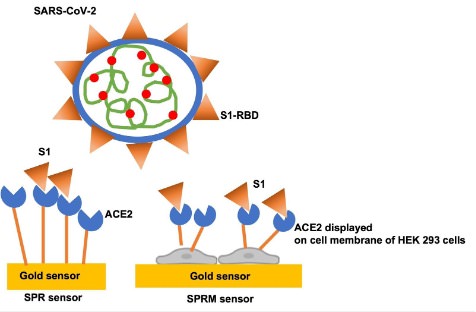
The pandemic due to the SARS-CoV-2 continues to evolve and remains an international concern. Covid infection is caused by the air-borne coronavirus 2 (SARS-CoV-2) and its mutants. The viral invasion …
Application Note 144: Single Cell Apoptosis Monitoring with SPRm Impedance
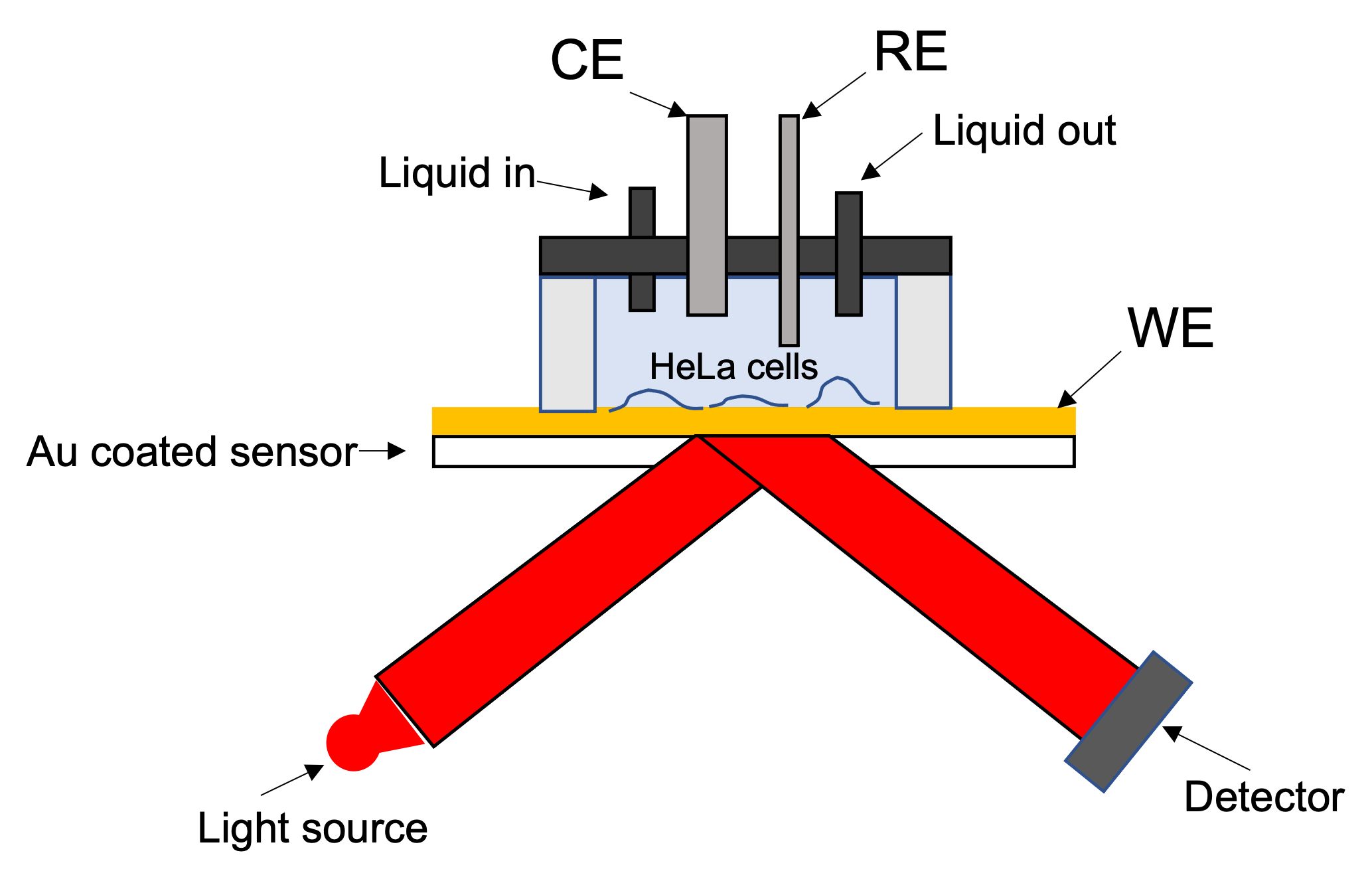
lectrochemical impedance spectroscopy (EIS) technique consists in introducing a perturbation into the sample by means of an AC voltage to an electrode and detecting its current response.
Application Note 143: Monitoring Electrochemical Activities of Single Prussian Blue Nanoparticles with SPRm Electrochemistry

Prussian blue is a pigment that is used to color paints, inks, textiles, and other commercial product. Prussian blue nanoparticles (PBNPs) are nanomaterials that present unique properties and excellent biocompatibility: they can be synthesized in mild conditions and can be derivatized with polymers and/or biomolecules. In addition, with its ability to transfer electrons efficiently and its large redox potential between reduction and oxidation, these nanoparticles result in enzyme-like characteristics which is ideal for biomedicine as therapy and diagnostic agents.
Application Note 142: Small Molecule Binding to Membrane Transporter Using SPRm200
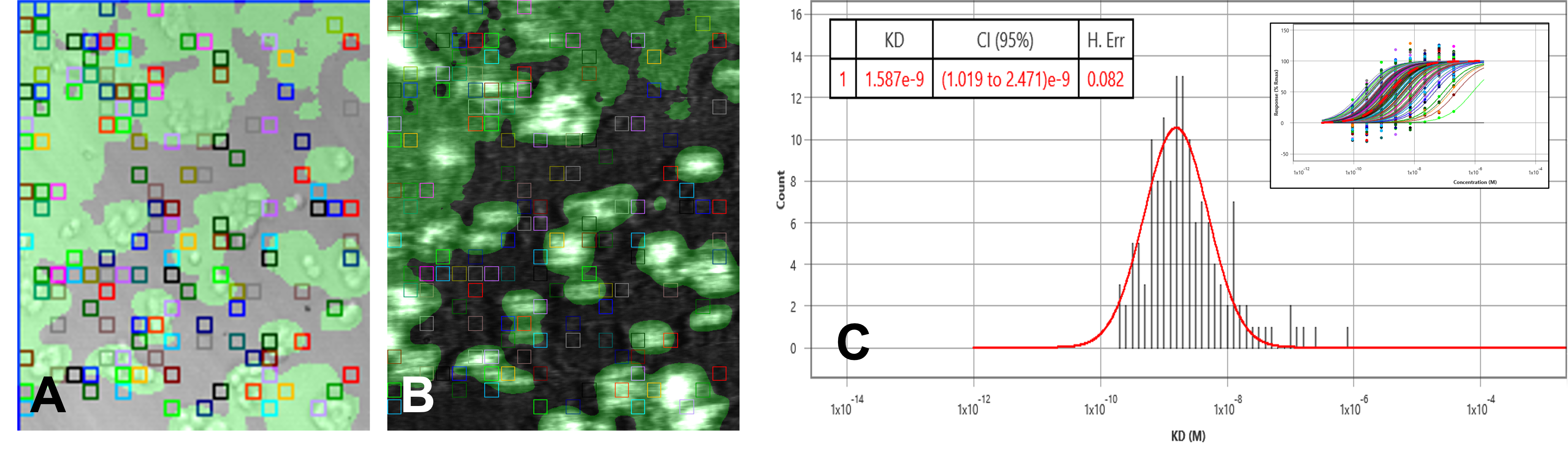
Transporters are large proteins (40–200 kDa) located in the plasma membrane of cells and organelles. They normally span the membrane many times and modulate the transfer of xenobiotics (including nutrients, micronutrients and pharmaceuticals), and endogenous substances such as neurotransmitters, hormones, signaling molecules, vitamins across cellular membranes, tissues or organ barriers.
Application Note 141: SPRM Measurements of Binding Kinetics between Rituximab and CD20 on Live B Cells

Cell-based immunotherapy has gained great attention from researchers and pharmaceutical companies, particularly due to its promise to treat various cancers. Understanding the interaction between drug candidates and targets on the cell membrane is crucial to drug development.
Application Note 140: Membrane Transport Protein Binding Kinetics Using Label-Free SPRm200
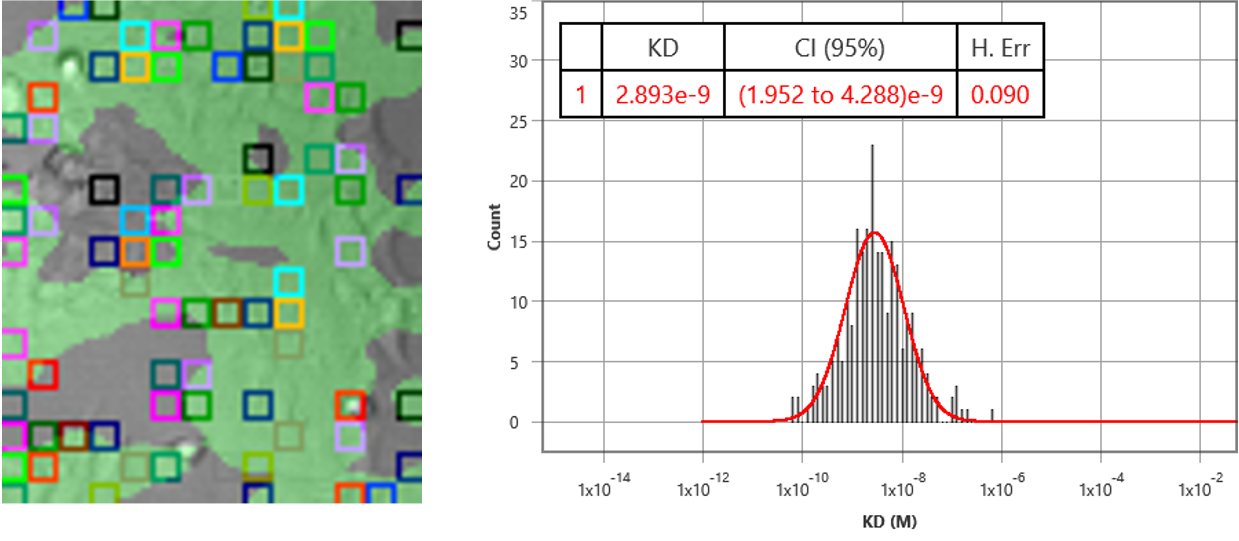
In this application note, binding interactions of an antibody to a membrane transport receptor were studied using SPRm 200. Transporters have important roles in physiological processes ranging from cellular uptake of nutrients to the absorption of drugs. Despite their importance as a drug discovery, it is difficult to determine its function: direct biophysical studies require these proteins be solubilized and purified and between their extraction and reconstitution, transport activity cannot be measured because of the lack of a vectorial environment.
Application Note 135: Measuring Binding Kinetics in Cell Medium with SPRM
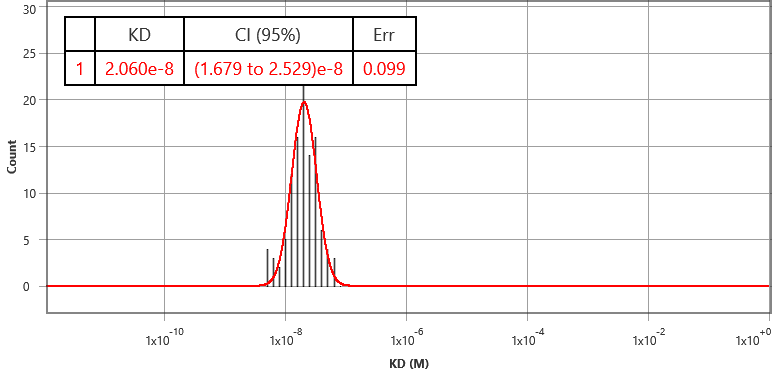
Fixation of cells is a convenient and routinely used method by many labs to study cells. However, fixation may alter certain types of protein receptors, thus affecting their binding kinetics. …
Application Note 134: Positive and Negative Control Studies of Small Molecule Binding to Membrane Protein
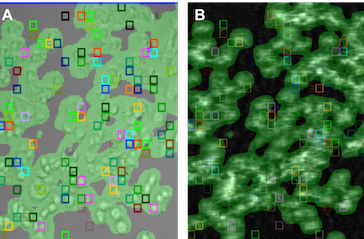
SPR microscopy (SPRm) has emerged as a unique tool for measuring the affinity and kinetics of ligand binding to membrane proteins on the cells directly. The technology integrates the traditional …
Application Note 132: SR142948 Antagonist Binding to NTS-1 Receptor Using SPR Microscopy
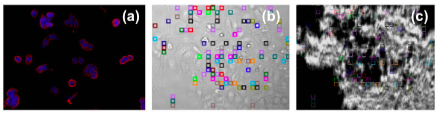
Neurotensin receptor belongs to the family of G protein-coupled receptors (GPCR), which has 424 amino acids with 7 putative transmembrane domains.(1) Neurotesin receptor 1 (NTS-1) mediates multiple functions of neurotensin, …
Application Note 131: SPR Microscopy for Live Suspension Cells
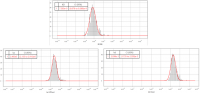
SPRm 200 system is the world’s first commercial Surface Plasmon Resonance Microscopy (SPRM) which combines the high spatial resolution of optical microscopy with the label-free sensing capability of SPR. With …