
Application Note 125: Lectin-Glycoprotein Interactions with SPR Microscopy
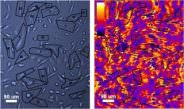
Membrane proteins are involved in many biological processes, such as signaling between cell’s internal and external environments, transport of ions and molecules and catalysis of chemical reactions [1] and they …
Application Note 124: Quantifying Molecular binding to Membrane Proteins on Individual Cells with Surface Plasmon Resonance Microscopy
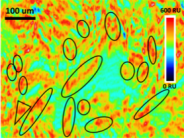
SPRm 200 System is the world’s first commercial Surface Plasmon Resonance Microscopy (SPRM). It combines the high spatial resolution of optical microscopy with the powerful sensing capability of SPR, making …
Application Note 123: Surface Plasmon Resonance Measurement of Protein-Peptide Interaction Using Streptavidin Sensor Chip

Streptavidin (SA) sensor chips are commonly used for kinetic interactions of biotinylated ligands. Streptavidin is a tetrameric molecule with an extremely high affinity towards biotin and, because of its binding …
Application Note 122: Surface Plasmon Resonance Microscopy for Multiple and Single Cell Membrane Binding Kinetics Studies
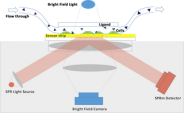
Surface Plasmon Resonance (SPR) is a powerful technique for measuring the binding kinetics of biomolecular interactions in a real-time and label-free manner [1]. In traditional SPR assays, the target molecule is extracted and purified from the cell and immobilized onto the sensor surface for measurement of the interaction kinetics between the target and the drug candidate.
Application Note 121: Protein Interactions in the Mycofactocin Biosynthetic Pathway
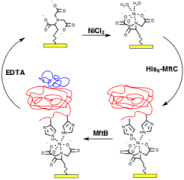
Protein-protein interactions are essential for many biochemical transformations and cellular processes. However, traditional methods of detecting these Surface plasmon resonance (SPR) is capable of analyzing protein-protein interactions kinetically while consuming little protein sample and does not rely on absorbance/fluorescence properties of proteins. This application note describes the SPR analysis of label-free protein-protein interactions found in the mycofactocin biosynthetic pathway.
Application Note 120: Electrochemical SPR Monitoring of Drug Interactions with Live Cancer Cells
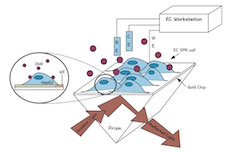
By combining SPR with electrochemical methods, many new capabilities and applications are now possible. This application note describes the measurement of apoptosis of cancer cells (HepG2) after treatment of Daunorubicin (DNR), an anti-cancer drug commonly used to treat specific types of leukemia.
Application Note 119: Small Molecule Detection by Surface Plasmon Resonance (SPR)
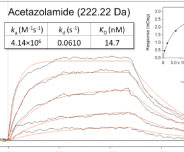
A major advantage of SPR technology is that the detection does not require the analyte to be labeled, such as with a fluorescent molecule or a redox-active tag. This is because SPR directly detects changes in refractive index resulting from changes in mass at the sensor chip surface. For researchers interested in pharmacology and pharmacokinetics or in general pharmaceutical research or drug discovery, this capability of label-free detection is particularly attractive.
Application Note 118: SPR for Food Safety and Monitoring: Melamine in Milk Samples
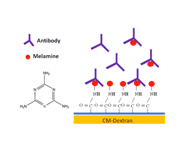
In 2008, the illegal adulteration of infant milk products with melamine (structure shown in FIG 1) led to an outbreak of adverse kidney and urinary effects in thousands of children in China.[1] Clandestine addition of melamine in milk products was to boost the detectable protein contents. Because of the severe impact of melamine on human health, the World Health Organization (WHO)
Application Note 117: Real-time Monitoring Biomarker Expression of Carcinoma Cells
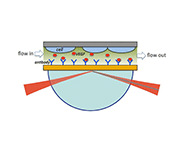
Vascular endothelial growth factor (VEGF) is an angiogenic signal protein biomarker produced by oxygen-hungry cells to stimulate the growth of blood vessels.[1] It binds to specialized receptors on the surfaces of endothelial cells and directs them to grow new blood vessels during embryonic development. Certain types of tumor cells produce abnormally large amounts of VEGF or block the action of angiogenesis inhibitors
Application Note 116: Temperature Dependence of Enzymatic Cleaving Activity
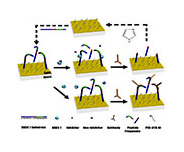
Some biomolecules such as enzymes can exhibit much greater biological activities at physiological temperature (37.5 °C) or higher (e.g., DNA polymerase). The focus of this study is to screen for potential inhibitors of β-site amyloid precursor protein cleaving enzyme 1 (BACE1). BACE1 is an enzyme that cleaves the transmembrane amyloid precursor protein to produce the amyloid beta